
Your needs, this model
Does it fit your priorities?
What use and stroke does Lansky document for LCDOGF?
Lansky describes the LCDOGF as a compact pocket sharpener and gives hand-guided whole-edge strokes on its ceramic rod. The directions call for a consistent angle and even pressure, then three to five strokes and the same process on the reverse side. They do not publish a specific knife-model or clearance chart.
Explore this need in the finder →Does the LCDOGF finger guard provide a specified degree setting?
No. The manufacturer calls the finger guard an angle guide, but its model-specific directions only ask the user to maintain a consistent angle; they provide no degrees, marked positions, range or per-side versus inclusive convention. Do not treat that phrase as an exact angle specification.
Explore this need in the finder →What does the 1,000-grit label tell you about LCDOGF?
The exact LCDOGF product record states 1,000-grit ceramic. Lansky's separate grit overview calls 1,000 grit ultra-fine and discusses polishing an already sharpened edge, but that page is general guidance for hones and is not a measured result or complete use specification for this rod. Compare the exact task and package rather than assuming it replaces a coarser repair stage.
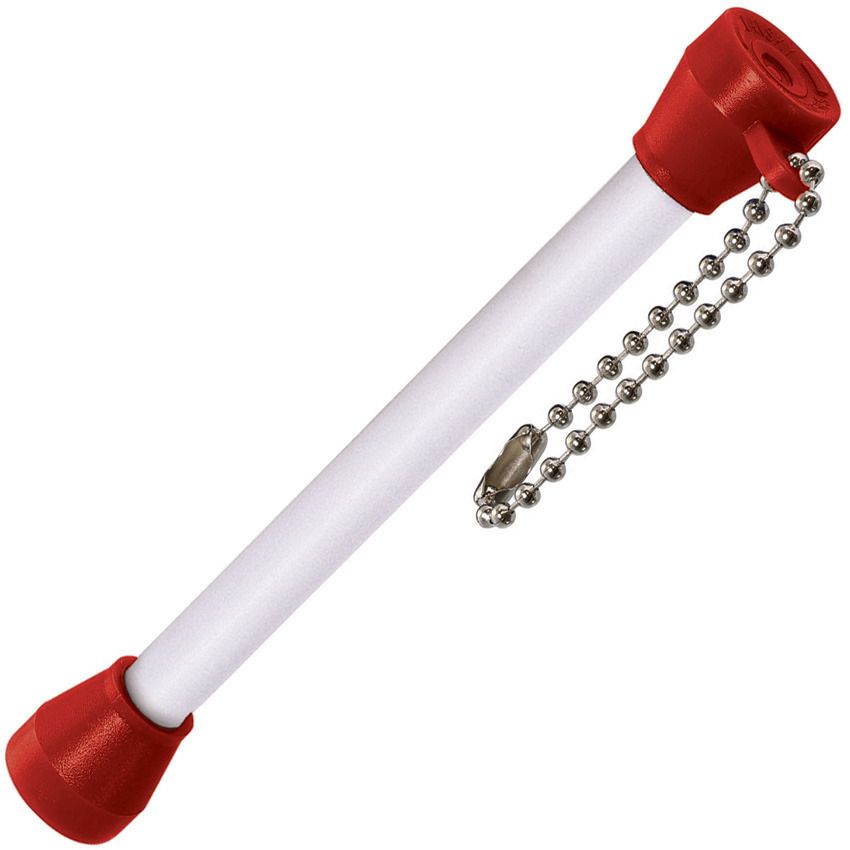
Explore this need in the finder →This research-based assessment covers Lansky's Mini Dog Bone Sharpener Fine, exact SKU LCDOGF. It is a distinct current manufacturer record, not a hands-on review. Its page describes a compact pocket-knife sharpener with a 1,000-grit alumina-ceramic rod, keychain and finger guards; the maker says the guard acts as an angle guide. The exact LCDOGF product page provides the operating directions, while its first enabled gallery image is labelled Fine.
Identify the exact Fine SKU before comparing it
The Fine page's main catalog name is shortened to “Mini Dog Bone Sharpener,” but its separate URL, exact SKU LCDOGF and gallery label identify the Fine version. Preserve that suffix when checking a listing. The Medium sibling, LCDOG, states 600-grit ceramic; this Fine record states 1,000 grit. The gallery images also show distinct color presentations, but photographs alone cannot establish abrasive grade, a complete seller package or a performance difference.
The separate Lansky grit overview labels a 1,000-grit ceramic hone ultra-fine and describes that general hone as a polishing stage for an already sharpened edge. That gives context for the number, not a model-specific promise that LCDOGF will deliver a particular finish or act like every hone in a controlled-angle kit. The exact LCDOGF page is still the authority for this product's one-rod instructions; it does not set out a multi-hone sequence or limit this sharpener to polishing only.
A simple manual path, with the angle left to the user
The manufacturer instructs the user to place the blade edge against the ceramic rod and gently push the entire edge across in one stroke, using even pressure and a consistent angle. Its analogy is to slice a thin layer from the rod. The directions say to make three to five strokes, repeat on the reverse side, and continue as needed. This small tool does not clamp the blade or motorize the pass; the user guides both the knife and stroke.
Lansky also says the finger guard acts as an angle guide. The same exact product page gives no numeric degrees, numbered marks, adjustment range or angle increment. It does not specify a per-side or inclusive convention. Treat “angle guide” as qualitative rather than as proof of a fixed 20-degree or other exact bevel. If a numeric setting is essential, the LCDOGF record cannot verify it.
What “Fine” does—and does not—settle
The exact 1,000-grit specification separates this model from the 600-grit LCDOG Medium and the 800-grit CS Knife Sharpener Fine, SKU LTRCSF. Similar product names do not make the latter two into LCDOGF equivalents: LTRCSF has a separate corner for ordinary serrations and groove panel for mini serrations, while the LCDOGF source only describes a whole-edge stroke. Those CS procedures should not be transferred to this rod. The manufacturer does not describe LCDOGF as a serration tool or scissors sharpener.
The “Fine” label and grit number are useful identification points, not an independent test of material removal, edge quality or how many passes a particular knife needs. The separate grit explainer is broad guidance, and does not state a model-specific starting condition for LCDOGF. If the knife has chips, a changed bevel, a damaged edge or a different factory angle, consult the knife and sharpener instructions before assuming a single fine rod is the whole solution.
Use fit and limitations
Lansky describes the Mini Dog Bone line as a compact pocket sharpener, so the evidence supports comparison for a pocket-knife routine. It does not give a named knife compatibility chart, blade length or thickness limits, handle-clearance measurements, steel guidance, or separate kitchen/hunting classification. The product's compact form and keychain may be relevant to carry, but the page supplies no dimensions or weight to help assess pocket fit. Check the exact knife geometry and your intended sharpening task rather than treating the broad category placement as universal compatibility.
There is also no stated strop, clamp or complete seller-box inventory in the exact product record. If a strop or accessory is essential, an unknown package status does not meet that requirement. Verify the actual seller's SKU, package list and return terms instead of using the gallery image as proof of contents.
Maintenance and careful handling
The manufacturer says the alumina-ceramic rod may darken as metal particles collect and directs cleaning with a Lansky Eraser Block or household cleanser. It provides a safety caution that a carelessly handled blade or pointed object can injure. Follow the exact instructions and handle the knife deliberately. This review has not used or tested the sharpener, and the manufacturer's cleaning statement is not a measured longevity result.
Bottom line
The LCDOGF is the exact 1,000-grit Fine Mini Dog Bone, a manually guided single-rod tool the maker describes for pocket knives. Its distinguishing value in a comparison is the exact abrasive grade and compact format; the user still controls the stroke, and no numeric angle, geometry chart, serration routine or complete seller package is confirmed. Consider it only after checking that this simple whole-edge procedure, the stated grit and the exact offer fit the knife and job. No sharpening performance, seller availability or personal-use experience is claimed here.
Key specifications
Key details at a glance
| Power | Manual |
|---|---|
| Sharpening format | Compact hand-guided 1,000-grit alumina-ceramic rod with finger guards and a keychain; maker describes whole-edge strokes across the rod |
| Included abrasive surfaces | One 1,000-grit alumina-ceramic rod |
| Angle-guide positions | ° |
Use the exact model’s instructions for operating limits, supplied equipment and version differences.
Sources for this review
Sources for this assessment

Check the requirements that matter to you
Use the finder to compare documented sharpener formats and limits; an unknown capability is not treated as a match.