
Your needs, this model
Does it fit your priorities?
What angle does the LCSTCCG Camo model support?
Lansky's exact LCSTCCG page specifies one preset 22.5° path that makes a 45° inclusive angle. That is one fixed slot, not an adjustment range. Check your knife manufacturer's convention and guidance before treating it as a suitable edge target.
Explore this need in the finder →What does the Camo Quick Fix do that the red LCSTC does not?
Both exact pages describe the same carbide sharpening side, fine 1,000-grit ceramic side and fixed 22.5°-per-side path. The Camo page additionally describes a camouflage finish and comfort-grip rubber over-mold. The manufacturer does not quantify a grip-performance advantage, so that claim is a configuration description rather than a handling result.
Explore this need in the finder →Is the Camo model verified for serrated blades or a particular knife type?
The exact record gives generic knife-slot directions but names no knife-use category, edge type, blade-length maximum or clearance limit. It does not provide a serration method. The compact form and pocket-sharpener name are not enough to confirm fit for a specific pocket, hunting, kitchen or serrated knife.
Explore this need in the finder →What “Camo” changes—and what it does not
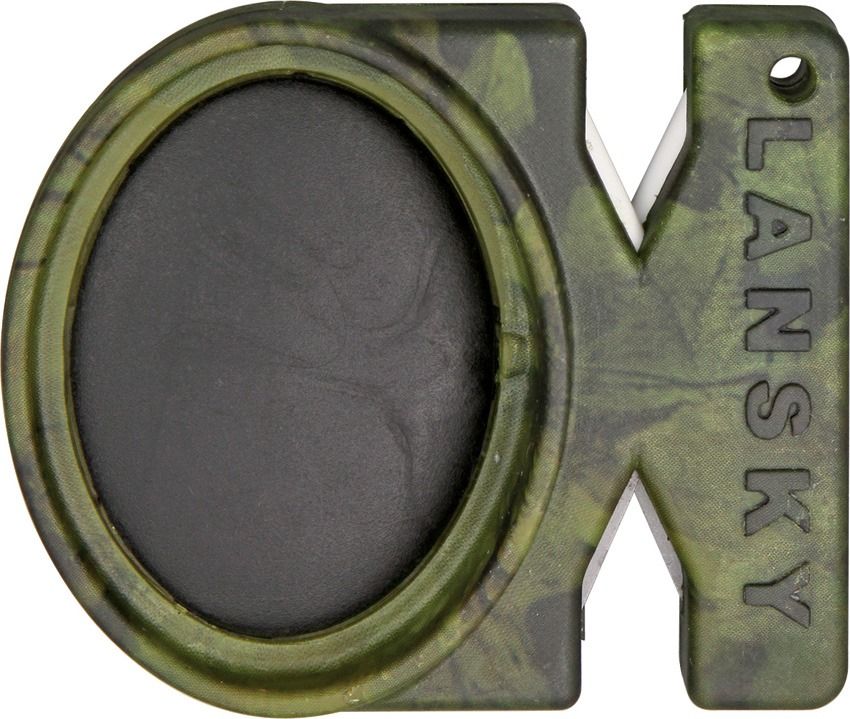
The Lansky LCSTCCG is the Camo version of the Quick Fix pocket sharpener. Its exact product page specifies a camouflage finish and a comfort-grip rubber over-mold design. That is the documented difference from the red LCSTC page. The two records otherwise describe the same manual arrangement: a tungsten-carbide side for sharpening and a fine 1,000-grit Crock Stick ceramic side for touch-up or polishing, with one preset 22.5-degree-per-side edge angle. The source does not quantify grip, comfort or durability, so the Camo wording should not be read as a tested handling advantage.
The model identity is important here. LCSTCCG is a separately listed SKU and has its own exact Camo image and manufacturer route. It is not simply a photograph color choice for an unnamed listing. It also is not Lansky's CLSTC “Duo” package, which contains two separate sharpeners. The LCSTCCG is one compact two-sided tool; compare the full code on the actual offer before buying.
A fixed-angle carbide-to-ceramic sequence
Lansky states that the preset angle is 22.5 degrees per side, making a 45-degree inclusive edge. There is no second angle position or adjustment range. The ceramic surface is a different abrasive stage, not an alternate guide angle. If the existing bevel on a particular knife uses another convention or setting, this compact format does not change that fact; check the knife maker's guidance first.
The LCSTCCG instructions call for placing the sharpener on a solid, flat surface and holding it firmly while keeping fingers clear of the blade. They say to hold the knife upright, draw it through the gray carbide side three or four times, turn the tool over, then use the white ceramic side for another three or four draws and clean the edge carefully. The exact text warns the user not to hurry. These are the maker's directions, not a description of our use: it is a manual operation whose handling and pressure remain with the person using it.
The ceramic is listed as fine 1,000 grit. The carbide grit is not stated. Lansky presents the ceramic pass as the polish step, but the source provides no independent test result, measured edge finish or claim about performance on a particular steel. The two surfaces make the package more specific than a bare single-slot carbide pull-through, but they do not establish that the tool can restore every damaged edge or suit every blade profile.
Portability is not a knife-fit specification
The product name and description emphasize a pocket-sized tool, with the page mentioning a pocket, tackle box, daypack, briefcase or purse as carrying places. That tells shoppers something about storage and scale. It does not name a particular supported knife category or guarantee that a given handle, bolster or blade will work safely in the slots. The exact LCSTCCG record does not provide a maximum blade length, thickness, steel-compatibility table, clearance measure, serration method, scissors routine or support for other tools.
For that reason, a broad “pocket knife” or “hunting knife” claim is not made here, even though “pocket sharpener” appears in the name. The source refers generally to a knife and gives a generic knife-blade operation. If your intended blade is serrated or unusually shaped, the page leaves a real gap rather than a no-fit verdict. Check the specific knife guidance and seek an exact-model answer when its geometry is essential.
Choosing the camo finish
The LCSTCCG image visibly shows a camouflage pattern and the Lansky mark. The exact product text—not the image—is the evidence for the rubber over-mold description. The same evidence discipline applies to its sharpening features: the picture shows one side of the body and cannot demonstrate both slots, the 1,000-grit rating or angle. The red LCSTC sibling is functionally documented with the same two abrasive sides and fixed angle. Its own page simply does not make a positive or negative statement about grip material, so the comparison is limited to what each exact source says.
The Camo record does not list a leather strop, storage case, oil or separate base. Ceramic polishing is not leather stropping, and no accessory from a different Lansky package should be presumed included. The manufacturer also gives no maintenance interval or detailed cleaning procedure for either abrasive surface. If the over-mold description is the reason to choose this version, verify that the exact model code and package in the offer are LCSTCCG; the evidence does not support a promise about how that material feels or wears.
Bottom line and purchase checks
LCSTCCG is a manual, compact sharpener with a specific fixed-angle path and two abrasive surfaces. Its Camo configuration is distinguished by the named finish and rubber-over-mold wording, not by a different supported angle or sharpening sequence. It may suit someone looking for those stated features, but the absence of knife-type, edge-profile and clearance detail means the shopper still has to confirm compatibility for the exact blade. There is no hands-on claim or measured performance conclusion in this assessment.
Before buying, match SKU LCSTCCG and the Camo finish, compare the stated 22.5-degree-per-side setting with the knife maker's bevel guidance, and check the intended blade's shape against the maker's draw-through instructions. If an included strop, a serration method, another angle or an explicit blade-clearance figure is essential, this exact page does not document it. The red LCSTC shares the documented sharpening arrangement; choose the Camo version for its separate finish description only when that is the distinction you actually want.
Key specifications
Key details at a glance
| Power | Manual |
|---|---|
| Sharpening format | Compact two-sided pull-through sharpener: a fixed carbide slot and a separate fine ceramic crock stick slot |
| Lowest angle setting | 22.5° |
| Highest angle setting | 22.5° |
| Included abrasive surfaces | One tungsten-carbide sharpening slot / One fine 1,000-grit alumina-ceramic Crock Stick slot |
| Benchtop base included | No |
| Strop included | No |
| Angle-guide positions | 22.5° |
Use the exact model’s instructions for operating limits, supplied equipment and version differences.
Sources for this review
Sources for this assessment

Check the requirements that matter to you
Use the finder to compare documented sharpener formats and limits; an unknown capability is not treated as a match.