
Your needs, this model
Does it fit your priorities?
What does medium mean on this exact LSS8CM?
Lansky’s current exact-SKU record labels the ceramic rod medium and specifies 600 grit. Its fine sibling LSS8CF is specified at 1,000 grit. The grit labels distinguish the documented rods but do not measure the edge they will produce or establish a mandatory progression.
Explore this need in the finder →Does LSS8CM set a numeric bevel angle?
No. Lansky says to try to match the knife’s bevel and keep the stroke angle consistent, but lists no marked position or numeric range. This is a hand-guided rod routine, not an exact-angle guide.
Explore this need in the finder →How does Lansky say to clean LSS8CM?
When the ceramic stick gets clogged, its product note says to use Nathan’s Natural Honing Oil or Lansky’s Eraser Block to clean it. The package record does not confirm either item is included, and it does not say oil must be used as a sharpening lubricant.
Explore this need in the finder →The Lansky Ceramic Sharp Stick LSS8CM is a hand-guided kitchen rod with a wooden grip and a maker-described medium 600-grit ceramic surface. It asks the user to follow the knife’s own bevel; it does not set a numeric angle. This is an evidence-based assessment of Lansky’s exact SKU record and instructions, not a hands-on test.
What the exact LSS8CM record establishes
LSS8CM is one 8-inch Ceramic Sharp Stick model, listed by Lansky under both Knife Sharpeners and Sharpening Rods. Those are two category appearances of one SKU, not separate configurations. The exact product record describes a ceramic rod with a wood-grip handle and identifies kitchen knives as its use. The “8-inch” wording is part of the model name, but the listing does not explain whether that is overall length, exposed abrasive length or usable reach. This review does not turn it into a clearance measurement.
The same exact listing calls the abrasive “medium” and specifies 600 grit. That claim separates LSS8CM from its fine ceramic sibling, LSS8CF, whose current Lansky record specifies 1,000 grit. Both are standalone hand-guided rods, but the different abrasive labels matter when deciding which role fits a kitchen routine. The manufacturer does not publish an abrasive progression or claim that the two sticks must be bought or used together.
A freehand routine, not a bevel-setting jig
Lansky’s instructions begin with the tip resting on a stable surface and the handle held firmly. The user tries to match the knife’s existing bevel, draws the edge down the rod as if slicing a thin layer, repeats the stroke three or four times with light-to-moderate pressure, then works the other side while maintaining a consistent angle. This is a hand-guided procedure. There is no clamp, angle dial or marked guide position described for this SKU.
That distinction is important if you are shopping around a fixed number. LSS8CM can fit a task where you are willing and able to follow the bevel already on a knife. Its documentation does not verify a 15°, 20° or 25° setting, and it does not tell you whether an angle number would be per side or inclusive. The rod’s shape and “medium” grit do not supply that missing angle evidence. If repeatable positioning is essential, look for a tool whose exact instructions describe a numeric guide and confirm that the guide’s convention matches the knife maker’s advice.
Where the medium rod may—and may not—fit
The specific use stated on the current product page is kitchen knives. The word “medium” and the 600-grit listing help distinguish this surface from the 1,000-grit fine LSS8CF, but they are not a quantified promise about how quickly this rod restores an edge. Lansky says a few strokes can help keep a knife sharp and ready; that is the maker’s description rather than a result from independent testing. The exact page does not describe a coarse repair stage, a sequence for damaged edges or a measured finish.
It also does not give a serration procedure, scissor instructions, a pocket/hunting-use classification, a maximum blade length or a handle-clearance chart. A kitchen-use label is not evidence that every blade shape will be comfortable to draw along the rod. Buyers with a specialty edge or unusually shaped knife should verify the exact geometry and instructions rather than assuming that all rods support all blades.
Care, setup and safety
The LSS8CM page says that when the ceramic stick becomes clogged with sharpening debris, use Nathan’s Natural Honing Oil or Lansky’s Eraser Block to clean it. That is a model-specific care note. It does not establish that oil is supplied, that oil is required during sharpening, or that the same instructions apply to a different abrasive. The product record does not provide a complete package inventory, so treat a required oil bottle, cleaning block, base or strop as unverified unless the exact offer lists it.
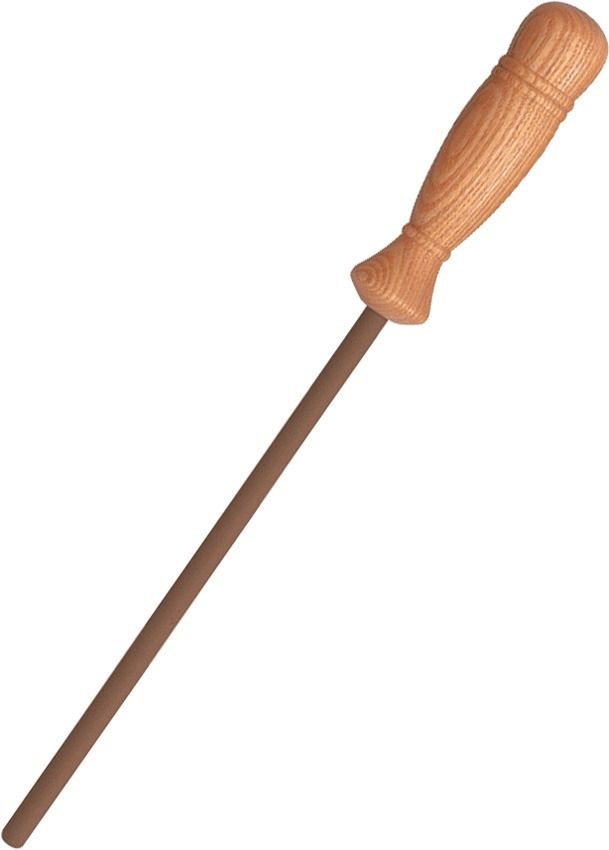
Because the instructions place the rod tip on a surface while the knife moves, choose a stable work area and keep fingers clear of the blade path. Lansky warns that sharpening is inherently hazardous and cautions against careless handling. The visible manufacturer image shows the single rod and turned wood-colored handle; it does not show or establish a clamp, countertop base, abrasive grade or the amount of usable reach. Do not use the picture as a substitute for the exact package description.
Choosing between LSS8CM and the fine sibling
Consider LSS8CM if you want a manually used ceramic rod, the manufacturer’s medium 600-grit designation, and an explicitly stated kitchen-knife task. Choose it only if freehand bevel matching suits your routine; it is not the documented choice for an exact angle, a supplied finishing sequence or a bundled strop. If your priority is a maker-described fine 1,000-grit rod for light touch-ups and honing, compare the separate LSS8CF assessment. The two model names are easy to confuse, so check the SKU as well as the finish or grit description.
Before ordering, confirm that the offer is the single LSS8CM stick rather than the fine LSS8CF or a multi-rod system. Check what the package actually includes and follow the instructions supplied with that exact item. The source record does not promise a particular knife fit, final edge, sharpening speed, service life, price or seller availability.
Evidence note: No ownership, sharpening trial, measurement, comparative test, price, stock check or customer experience is claimed. The assessment keeps the exact 600-grit medium LSS8CM distinct from the 1,000-grit fine sibling and leaves undocumented fit and package details open.
Key specifications
Key details at a glance
| Power | Manual |
|---|---|
| Sharpening format | Hand-guided ceramic rod with a wood-grip handle; the user places the tip on a stable surface and draws the knife edge down the rod while matching the knife’s existing bevel. |
| Included abrasive surfaces | One medium 600-grit ceramic rod |
| Angle-guide positions | ° |
Use the exact model’s instructions for operating limits, supplied equipment and version differences.
Sources for this review
Sources for this assessment

Check the requirements that matter to you
Use the finder to compare documented sharpener formats and limits; an unknown capability is not treated as a match.