
Your needs, this model
Does it fit your priorities?
Can the Quick Edge set a different sharpening angle?
No. Lansky specifies one preset 22.5°-per-side path, equal to a 45° included angle. The slot is not an adjustable angle guide, so first confirm that this convention and fixed setting are appropriate for the exact knife.
Explore this need in the finder →Which knife uses does Lansky identify for the LSTCS?
The exact LSTCS page names kitchen, work and outdoor sporting knives and says right- or left-handed users can use the tool. It does not state blade-length, thickness or steel limits, so check the actual blade and follow the maker's setup rather than assuming every profile fits.
Explore this need in the finder →Is the Quick Edge a coarse-to-fine maintenance system?
The LSTCS record documents one replaceable tungsten-carbide pull-through element, but gives no grit and no ceramic, stone or strop stage. Lansky calls carbide fast and warns against heavy pressure; use the small number of light strokes in its instructions and clean the blade afterward.
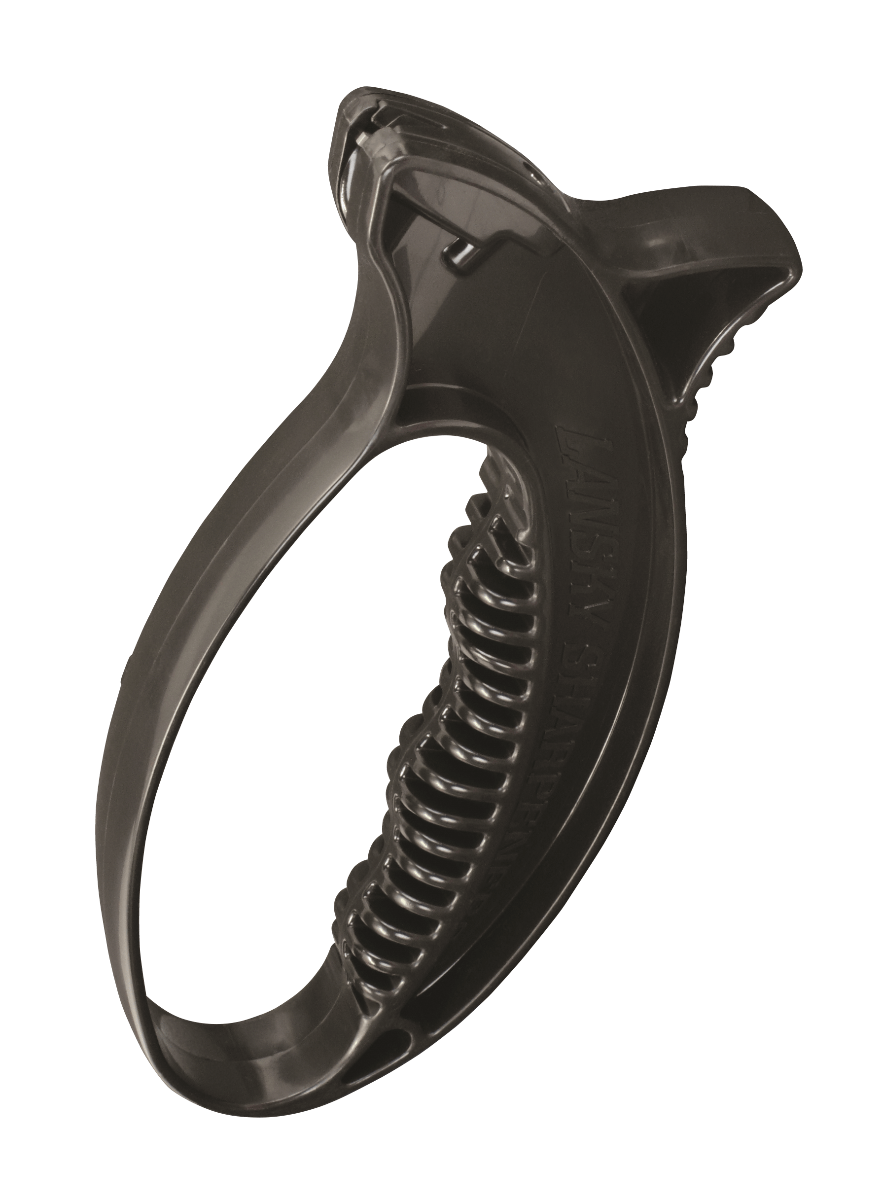
Explore this need in the finder →The Lansky Quick Edge® LSTCS is a small, manual pull-through sharpener built around one tungsten-carbide V-slot. This assessment uses the exact Lansky SKU page and instructions; it is not a hands-on test. The listing describes a simple job: hold a knife steady on a firm surface and draw this sharpener along its edge. That is a very different workflow from clamping a blade and progressing through several guided abrasives.
One fixed path, not an adjustable guide
Lansky specifies a preset 22.5° sharpening path that produces a 45° included angle. The number refers to the angle on one side; it is not a 22.5° total edge. There is one slot, not a dial or a set of alternate angle positions. If an existing knife specification calls for another bevel, the LSTCS cannot reproduce it as written. A finder match at 22.5° is only a capability match, not advice to reprofile a particular knife.
It is also important not to confuse the sharpening setting with the maker’s handling instruction to hold the sharpener at roughly 90° to the blade during the pull. That perpendicular hand position describes how the tool approaches the blade; it does not change the fixed bevel that the slot creates. Lansky does not give a carbide grit value, a blade-length limit or a compatibility chart for unusually thick, flexible or shaped blades.
What the instructions ask the user to do
The LSTCS page says to put the knife on a flat, solid surface with its edge facing upward and about half an inch extending beyond the surface. The user holds the knife steady with one hand, grips the sharpener with fingers inside its guard and thumb against the rest, then draws the slot from near the handle toward the tip. Lansky describes three or four light-pressure strokes and says the exact effort varies with the steel. Its marketing copy says the task can take fewer than ten passes, but that is not a measured result for every blade.
This setup demands both hands and a stable work surface, even though the sharpener itself is portable. The LSTCS page specifies right- or left-handed use and names kitchen, work and outdoor sporting knives. Those are useful boundaries, not proof that every profile fits. Check that the blade can sit securely as described and that the edge geometry is suitable before drawing it through a fixed-angle carbide slot. The maker specifically warns against heavy pressure and asks the user to clean the blade after sharpening.
Fast carbide is the whole system
The single replaceable carbide element is the only sharpening surface identified for SKU LSTCS. Lansky describes carbide as fast, but the listing does not give a grit or include a separate ceramic hone, stone or strop stage. That makes the tool straightforward to understand and limits what can be claimed about a finishing sequence. It is not a coarse-to-fine kit, a serration system or a scissor sharpener. The exact instructions do not supply a serrated-edge method.
For regular upkeep, the replacement insert may be a useful service feature: the source says the carbide element can be replaced and reversed. It does not specify an expected service life, replacement schedule or sharpening result. I would not infer one from the replaceable design. Likewise, the page gives no care instructions for oil, water or cleaning the insert, so do not import directions from a different Lansky model. The explicit cleanup step is to clean the knife blade thoroughly.
How it differs from the Deluxe Quick Edge
The black LSTCS has a molded plastic housing, finger guard, thumb rest and a stated right- or left-hand orientation. The red LSTCN and camouflage LSTCNCG Deluxe variants use an overmolded rubber grip and a larger thumb rest; Lansky also describes a lanyard hole for belt or pack attachment. Those changes affect the grip and carry features, not the documented angle or abrasive. The Deluxe product pages still specify one fixed 22.5°-per-side carbide path and three or four light-pressure strokes. The higher-trim name does not make it an adjustable system or add a polishing surface.
Choose the LSTCS when the basic molded grip and compact single-slot format suit the routine, and only after confirming the fixed 45°-inclusive geometry is acceptable for the specific knife. If a larger overmolded grip or lanyard point matters, compare the exact LSTCN or LSTCNCG package instead. If the need is a different angle, a less aggressive maintenance surface or dedicated serration work, look for a separately documented tool rather than assuming the Quick Edge has a hidden second mode.
Bottom line
The LSTCS is a narrowly specified manual sharpener: one replaceable carbide slot, one fixed angle and a direct pull-through procedure. That can make sense for a compatible knife when quick, portable edge work matters more than angle choice or staged finishing. Its limitations are equally clear: no documented variable setting, grit number, fine hone, serration routine or blade-fit dimensions. Read the exact Lansky Quick Edge instructions and verify the LSTCS SKU before purchase; a visually similar Deluxe model is a different retail configuration.
Key specifications
Key details at a glance
| Power | Manual |
|---|---|
| Sharpening format | Handheld single-slot carbide pull-through sharpener with a molded finger guard and thumb rest |
| Lowest angle setting | 22.5° |
| Highest angle setting | 22.5° |
| Included abrasive surfaces | One replaceable tungsten-carbide pull-through element; grit is not stated |
| Angle-guide positions | 22.5° |
Use the exact model’s instructions for operating limits, supplied equipment and version differences.
Sources for this review
Sources for this assessment

Check the requirements that matter to you
Use the finder to compare documented sharpener formats and limits; an unknown capability is not treated as a match.