
Your needs, this model
Does it fit your priorities?
Does Lansky specifically list the LGRDN for pocket or EDC knives?
Yes. The exact product text names Every Day Carry knives alongside lawn-mower blades. That supports the pocket-knife side of the finder’s combined pocket-or-hunting choice, but it is not a hunting-specific fit chart and does not establish compatibility with every blade length, handle, steel or edge profile. The same record describes one medium 280-grit alumina-oxide stone and a hand-guided method.
Explore this need in the finder →Can the LGRDN set a required numeric knife angle?
No numeric angle or per-side/inclusive convention appears in the exact SKU record. Lansky’s instructions tell the user to match the stone to the edge and keep a consistent angle, so this is a freehand task; an exact-angle requirement is not verified for LGRDN.
Explore this need in the finder →What should you know about the LGRDN’s handle and handling directions?
Lansky says the stone has no handle and instructs the user to hold it in one hand and the knife or tool in the other. For a machete it recommends supporting the blade so it does not flex, and it warns users to keep fingers clear of sharp edges. The page does not supply a knife clamp or a particular knife workholding method, so assess stability and safe control before choosing it.
Explore this need in the finder →This assessment is based on Lansky’s exact record for the Lawn & Garden Sharpener, SKU LGRDN, and its stated instructions—not on using the stone. The product sits in a garden-tool-oriented family, but the exact maker page also names Every Day Carry knives. That model-specific knife claim is enough to include it in a knife-sharpener comparison; it does not mean the page verifies every pocket, hunting, kitchen or specialty blade.
A medium-grit stone with a wide tool brief
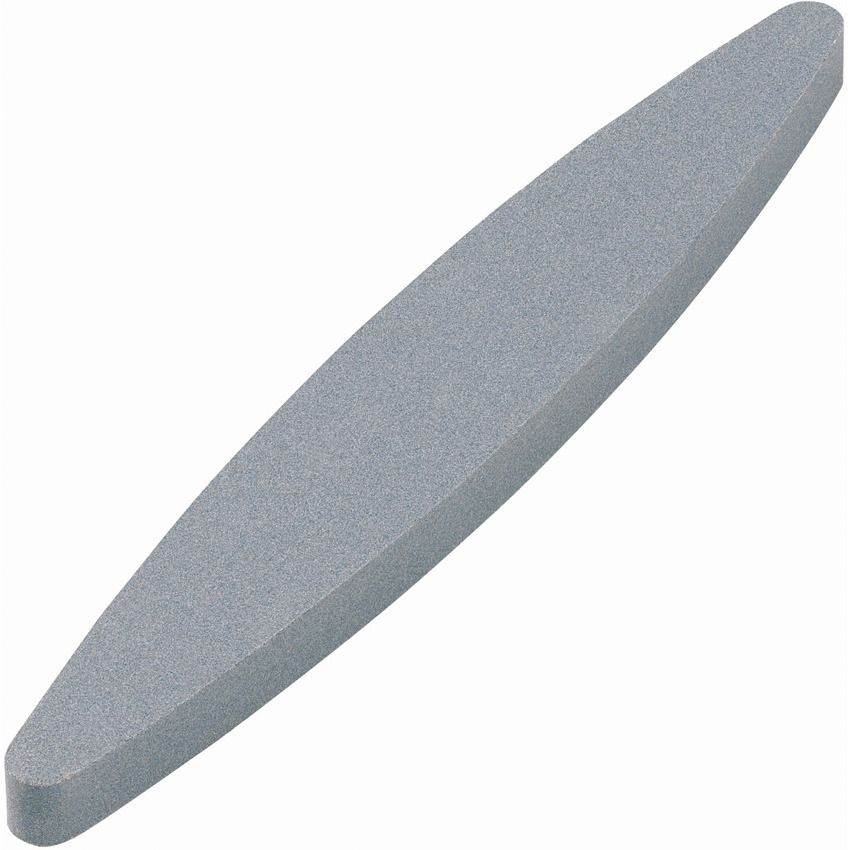
Lansky identifies the abrasive as medium 280-grit alumina oxide and describes an unusual stone shape intended to reach different edges. The named jobs extend from EDC knives to lawn-mower blades, with axes, hatchets, machetes and other outdoor tools appearing in the maker’s use list. This is a single hand-held abrasive, not a multi-stage kit. The source does not list a second grit, a polishing face, a leather strop or a knife clamp in the exact LGRDN record.
The broad tool role is useful context, but it is not a shortcut to knife compatibility. The maker names EDC knives, which supports the pocket-knife side of the finder’s combined pocket-or-hunting option. It does not give a hunting-knife-specific procedure, a kitchen-knife claim, a blade-length limit or clearance guidance for thick spines and large handles. Treat the “garden” title as a clue to the product’s broad intended jobs, not as proof that it is only for yard tools; equally, do not convert a general EDC claim into a guarantee for every knife.
Freehand means the user supplies the angle
The instructions describe holding the stone in one hand and the blade or tool in the other. They ask the user to match the stone to the existing edge, keep a consistent angle, push across the edge while using the stone’s length, apply moderate pressure and work both sides. Those are hand-guided directions, not an angle-control mechanism. Lansky publishes no numeric setting, adjustment scale or per-side versus inclusive convention for LGRDN.
That distinction matters if you want a repeatable bevel or must meet an exact angle: the LGRDN page cannot confirm that requirement. A “match the edge” instruction leaves the angle choice and consistency to the person sharpening. The product image shows the stone’s contoured form but does not establish its measurements, how it fits a particular hand, or whether an individual blade can be held safely in the described position.
Safety and finish are part of the decision
Lansky explicitly notes that the stone has no handle and warns the user to take care around a blade. Its directions for a machete emphasize supporting the blade so it does not flex; this is a useful warning for long, flexible tools, not a special knife clamp or a knife-specific setup. The instructions also call the result on heavy-use tools potentially rough-looking. For an EDC knife buyer, that is a reason to check whether a medium 280-grit surface and an unassisted stroke fit the intended maintenance job. The listing does not document a finer finishing stage, a stropping step, a cleaning method, or a result for a particular steel or edge geometry.
How it differs from nearby manual options
The FP2860 is also a manual portable sharpening choice and includes 280- and 600-grit diamond faces; the LGRDN record instead identifies one 280-grit alumina-oxide stone and specifically calls out EDC knives alongside garden tools. The LDFHS is another distinct hand tool: it uses a single 600-grit diamond surface and adds three different-size fish-hook grooves, but does not publish a numeric knife angle either. These are not interchangeable versions of one system; the abrasive material, additional surfaces and tool-specific features differ.
Some cross-listed Lansky hones are outside this knife library because their exact descriptions and instructions establish tool work without a knife task. LGRDN crosses the category boundary for a different reason: its exact item description explicitly names EDC knives. This is a product-specific scope decision, not a claim that one stone is better than another or that a neighboring SKU’s capability transfers.
What to verify before choosing it
Consider LGRDN only if you are comfortable guiding a hand-held stone and controlling the contact angle yourself. For the pocket-knife use, compare your actual blade and bevel with Lansky’s instructions; the maker does not promise a fit for every pocket or hunting knife. If you need a numeric guide, a confirmed serration routine, a kitchen-use claim, multiple grits or an included strop, this record does not establish those features.
Before ordering, confirm the exact SKU LGRDN and that the offer is the single contoured medium-grit Lansky stone, rather than a similarly named tool or a different package. The official page supplies no overall dimensions or package-level seller guarantee, so verify those details in the exact offer if they affect your decision. No hands-on test, ownership, performance measurement, current price or availability is implied here.
Key specifications
Key details at a glance
| Power | Manual |
|---|---|
| Sharpening format | Single hand-held contoured 280-grit alumina-oxide stone; no handle, numeric angle guide or knife clamp is documented |
| Included abrasive surfaces | One medium 280-grit alumina-oxide stone |
| Angle-guide positions | ° |
Use the exact model’s instructions for operating limits, supplied equipment and version differences.
Sources for this review
Sources for this assessment

Check the requirements that matter to you
Use the finder to compare documented sharpener formats and limits; an unknown capability is not treated as a match.