
Your needs, this model
Does it fit your priorities?
Which serration methods does the LTRCS Medium record specify?
For ordinary scallops, Lansky describes using the corner with a controlled rolling push. For mini serrations, its instructions use the specialty grooved panel and repeat three to four times. The record publishes no tooth-radius or scallop-size range, so compare the actual blade geometry rather than assuming every serration fits.
Explore this need in the finder →Does the LTRCS provide a numeric angle setting?
No. The exact LTRCS directions ask for a consistent user-controlled angle but give no degree setting, range or per-side/inclusive convention. Its thumb rests are not described as an angle guide. A required numeric setting is therefore not documented for this model.
Explore this need in the finder →What distinguishes the LTRCS Medium from the Fine version?
The exact manufacturer records state 600-grit ceramic for LTRCS and 800-grit ceramic for LTRCSF. Their broad corner, mini-groove and flat-face procedures are similar, but the source does not prescribe using them together or quantify a performance difference. Verify the SKU and the seller’s actual package.
Explore this need in the finder →This is a research-based assessment of Lansky’s exact CS Knife Sharpener Medium, SKU LTRCS, based on its model-specific manufacturer record and directions. It is not a hands-on report. The record identifies a 600-grit ceramic handheld tool whose intended serration work has two distinct contact shapes: a corner for ordinary scallops and a grooved panel for mini serrations. The same product instructions also describe a flat-side method for plain edges. The exact LTRCS product page is the source for those use details and the maker’s cleaning guidance.
What makes this exact version a separate choice
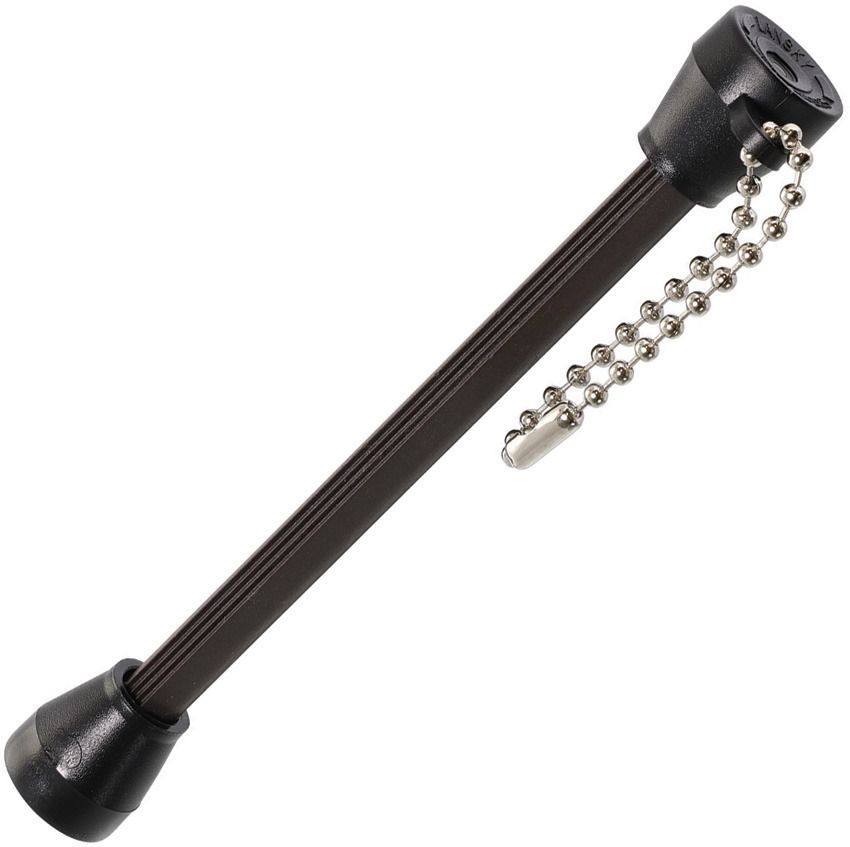
Lansky lists the LTRCS among its knife, portable and sharpening-rod categories. The product description names the Medium version and states a 600-grit ceramic abrasive. It is described as a pocket-size tool for serrations on folding and fixed-blade knives, with safety thumb rests and a keychain. That named use is more informative than size alone, but it does not certify clearance for every blade shape or guarantee a fit for every serration pattern.
The SKU matters because Lansky also lists a Fine CS sharpener, LTRCSF, as a different configuration. The Fine page states 800 grit; this Medium page states 600 grit. The products share the same broad body style and published operation types, but the abrasive grade differs, so the retailer’s exact SKU should be checked rather than treating “CS Knife Sharpener” as one interchangeable item. The available source does not prescribe a sharpening progression between them or quantify a performance difference.
Three procedures, not one generic serration claim
For ordinary serrations, Lansky directs the user to bring the corner to one scallop, maintain a steady angle and pressure, then make a gentle rolling push across that recess. The maker says one stroke removes the burr from the back of the blade. Its mini-serration route is different: line up the teeth with the specialty groove panel, press them into the grooves with consistent angle and pressure, and repeat three or four times. The panel therefore adds a specific feature that should not be assumed for a plain ceramic rod.
Plain-edge work uses the flat side, not the corner or grooved panel. The instructions describe pushing the full edge across the surface and making three to five strokes before repeating on the other side. The tool is hand-guided throughout; it does not clamp the knife or set the angle for the user. A shopper who mainly maintains plain kitchen knives may prefer a different format with documented angle positions or a broader kitchen-specific routine.
What the angle and use evidence does—and does not—say
The exact directions call for a consistent angle but do not publish a degree setting, range, increment, marked guide position or per-side versus inclusive convention. The thumb rests are described as safety features, not as an angle gauge. This is not a verified pick for someone who must reproduce a particular numeric bevel. Nor does the folding/fixed-blade description answer every compatibility question: blade thickness, handle clearance, scallop radius, steel, edge damage and the knife maker’s bevel guidance are not mapped in the LTRCS record.
For a useful comparison, the LTRCSF Fine keeps the CS family’s corner and groove routines but has its own 800-grit specification and exact SKU. The LTRSP Spyder Sharpener also documents a ceramic serration tool, but its instructions describe small and broader edges rather than this model’s named mini-serration groove panel. The LTRIM Multi Sharpener has another 600-grit ceramic layout, with separate instructions for a fishhook groove. Those are adjacent designs, not evidence that their grooves or directions transfer to LTRCS.
Cleaning, handling and package checks
Lansky says the ceramic rod may darken as it collects metal particles and directs the owner to use an Eraser Block or household cleanser. That instruction is tied to the abrasive surface; the source does not provide a replacement interval or a grit-renewal method. Because the blade is moved by hand against a compact sharpener, the maker’s safety warning is relevant: keep the knife controlled and the edge pointed away from the user during the stated routine. This assessment does not claim to have tried the stroke or verify how it feels in use.
The product record names the sharpener, thumb rests and chain but does not provide a complete seller-package checklist, dimensions, weight, case, strop or clamp status. The photograph depicts the tool; it cannot establish what a particular retailer will ship. Before ordering, confirm SKU LTRCS, check the exact seller’s package and return terms if an accessory matters, and compare the serration geometry with the maker’s corner and mini-groove instructions. If a numeric angle, a known scallop-size range or a specific knife-model fit is essential, the current manufacturer evidence leaves that question unanswered.
Bottom line
The LTRCS is best understood as a compact, manual ceramic tool with explicit instructions for ordinary serrations, mini serrations and a separate plain-edge method. Its distinctive mini-groove panel and folding/fixed-blade purpose make it worth comparing for users whose serrated knife matches that general scope. The meaningful limitation is that angle control remains with the user, and the source offers no dimensions or geometry chart for confirming an individual blade. The Medium designation corresponds to the stated 600-grit ceramic surface; it should not be confused with the separately listed 800-grit Fine SKU. No test results, ownership experience, measured performance or seller availability are claimed here.
Key specifications
Key details at a glance
| Power | Manual |
|---|---|
| Sharpening format | Handheld 600-grit ceramic rod with a corner for ordinary serrations, a grooved panel for mini serrations, and a flat face for plain-edge strokes |
| Included abrasive surfaces | One 600-grit ceramic sharpening rod |
| Angle-guide positions | ° |
Use the exact model’s instructions for operating limits, supplied equipment and version differences.
Sources for this review
Sources for this assessment

Check the requirements that matter to you
Use the finder to compare documented sharpener formats and limits; an unknown capability is not treated as a match.